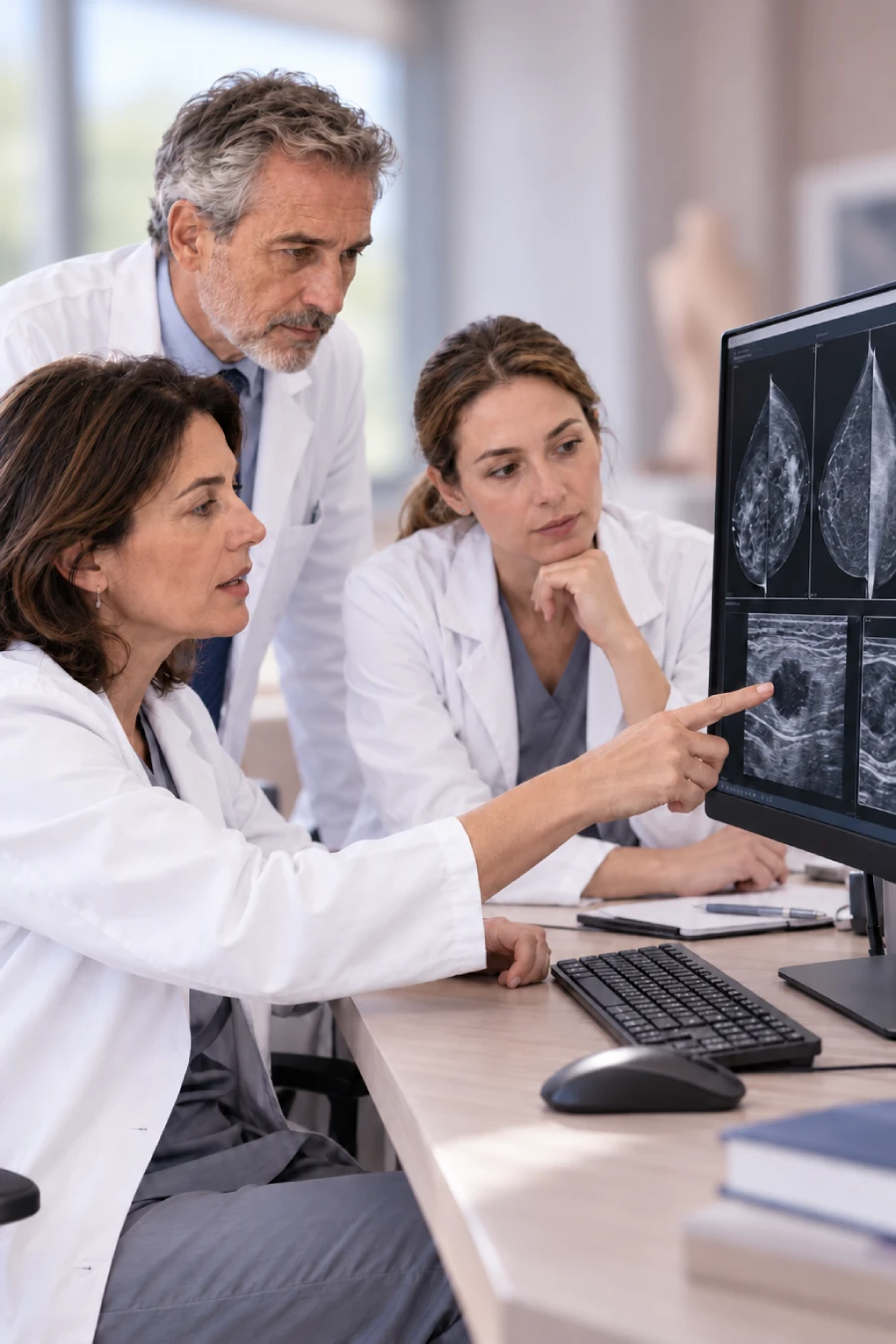


The modern management of breast diseases, particularly breast cancer, requires close collaboration among multiple medical specialties. The Master’s Programme in “Breast Diseases” is structured around this same philosophy. Surgeons, radiologists, pathologists, medical oncologists, radiation oncologists, and other specialised healthcare professionals contribute to the teaching, while clinical training provides practical experience of this multidisciplinary collaboration.
The Programme is completed over three (3) academic semesters, commencing in the winter semester. All courses are compulsory and follow a sequential structure, covering the entire spectrum of patient care, from prevention and diagnosis to treatment and research.
The first semester includes theoretical instruction on benign and malignant breast diseases, breast imaging, and percutaneous biopsies, alongside clinical training in prevention and diagnosis. The knowledge acquired during the first semester provides the essential foundation for the therapeutic approaches covered in subsequent semesters.
The second semester focuses on surgical treatment and adjuvant therapies. Clinical training continues in breast imaging and diagnostic assessment, while expanding to outpatient clinics, operating theatres, multidisciplinary oncology boards, and treatment departments.
The third semester is dedicated to the preparation of the Master’s Thesis. Successful completion of both the first and second semesters is a prerequisite for the assignment of the thesis.
The Programme combines three core pillars of education:
Theoretical Training: Five compulsory courses organised into thematic units, including lectures, clinical case presentations, and seminars.
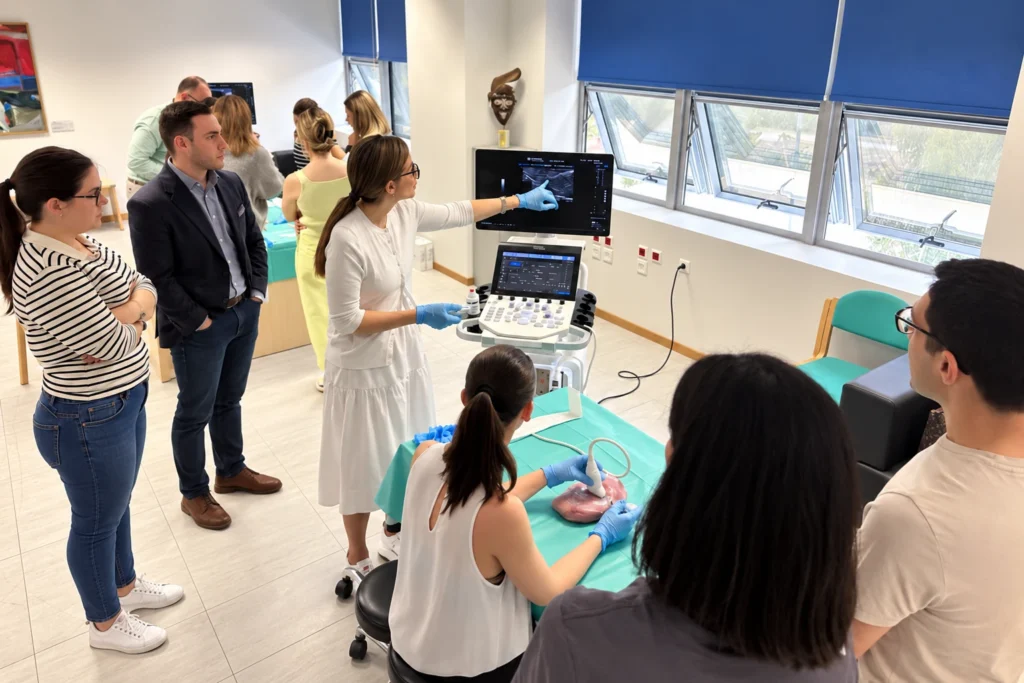
Practical Training: In-person clinical training at specialised Breast Units and Centres, operating theatres, and diagnostic imaging, radiotherapy, and pathology departments, under the supervision of or in collaboration with the supervising faculty member.
Research: Preparation of an individual, original Master’s thesis in the form of a research study or literature review.
Mode of Delivery & Teaching Methods:
Theoretical courses are delivered through a combination of 70% synchronous online learning and 30% in-person teaching.
The National and Kapodistrian University of Athens (NKUA) e-class and Webex platforms are used to support teaching and learning activities.
Clinical training requires compulsory in-person attendance.
Theoretical courses include mandatory participation in scientific workshops, conferences, and continuing education courses selected by the Coordinating Committee. In addition, students are encouraged to participate in research group seminars, journal clubs, and other scientific events organised by the Programme.
Contact telephone: +30 6936576528
Email: breastmsc@med.uoa.gr
Office hours: 9:00–15:00, Monday to Friday
Copyright © 2026 National and Kapodistrian University of Athens